

Facility management in Australia is about much more than keeping buildings running smoothly. At first glance, you might think it is just routine maintenance and cleaning. Yet, the sector now contributes over $20 billion to the Australian economy and employs more than 200,000 people, proving that its impact stretches far beyond simple upkeep. Business owners are discovering that mastering facility management can mean the difference between thriving in 2025 or falling behind.
Quick Summary
| Takeaway | Explanation |
|---|---|
| Implement Strategic Asset Management | Develop customized management plans to optimize infrastructure and enhance operational efficiency. Regular assessments ensure compliance and longevity of assets. |
| Adhere to Cleaning Regulations | Follow the guidelines for hygiene and cleanliness to protect employee health and reduce workplace hazards effectively. |
| Utilize Technology for Workforce Management | Leverage AI and predictive analytics to streamline recruitment and optimize staff performance, ensuring agility in workforce deployment. |
| Focus on Sustainable Practices | Integrate energy-efficient technologies and waste reduction strategies into facility management to promote environmental sustainability. |
| Enhance Workforce Skills Training | Invest in continuous training to equip employees with the necessary skills to adapt to emerging technologies and operational complexities. |
Key Facility Management Responsibilities Explained
Facility management is a complex and critical function that ensures organizations maintain safe, efficient, and productive environments. At its core, facility management encompasses a wide range of strategic and operational responsibilities that go far beyond simple maintenance.
Strategic Asset and Infrastructure Management
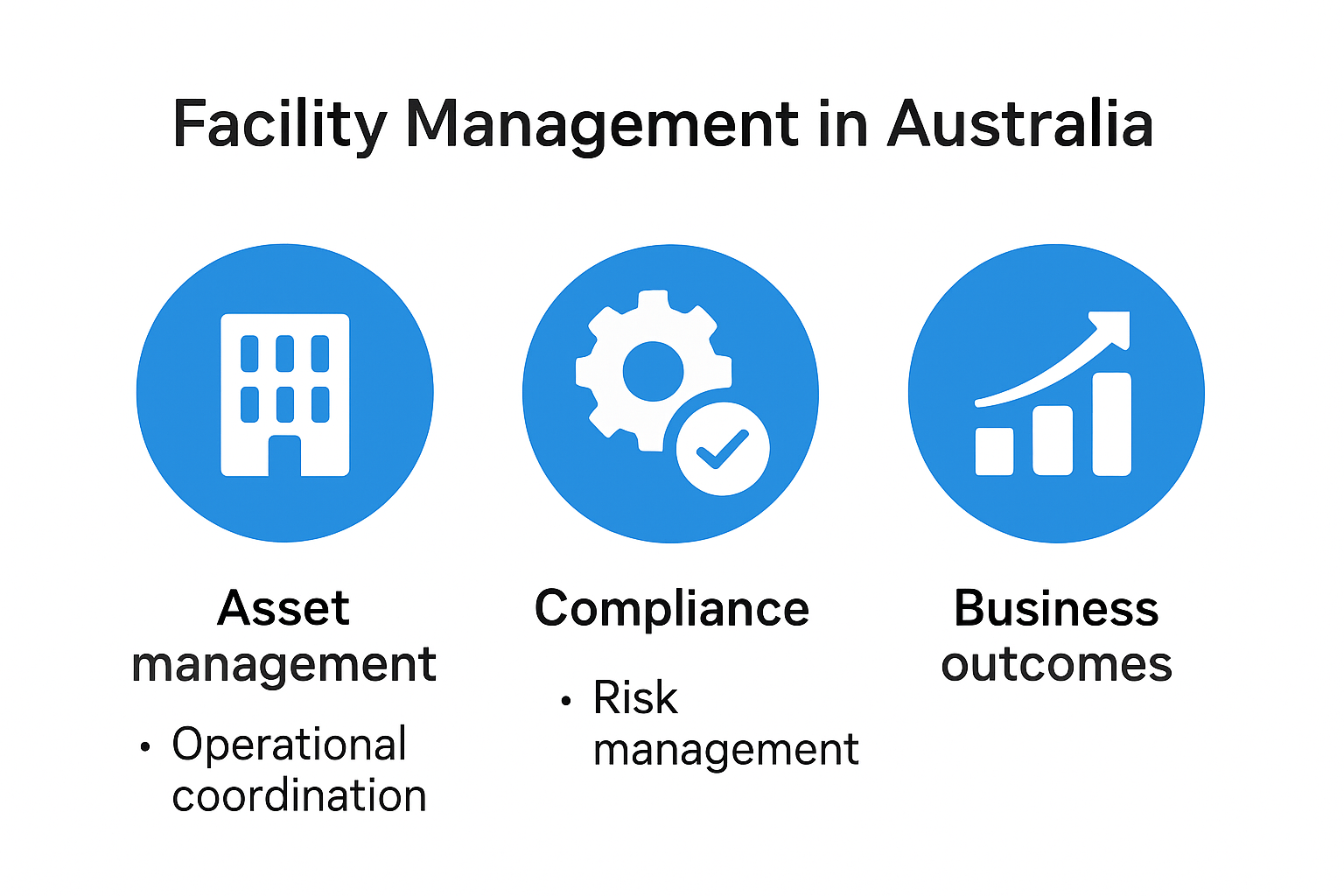
Facility managers play a pivotal role in protecting and optimizing organizational assets. According to Infrastructure Magazine, the sector contributes over $20 billion to the Australian economy and employs more than 200,000 professionals. Their primary responsibility involves comprehensive asset management, which includes developing strategic plans that align physical infrastructure with organizational goals.
This involves conducting regular asset assessments, implementing preventative maintenance strategies, and ensuring compliance with safety regulations. Facility managers must create customized management plans that address the unique needs of each facility, considering factors such as building age, usage patterns, and technological requirements. By proactively managing infrastructure, they help reduce unexpected downtime, control operational costs, and extend the lifespan of critical building systems.
Operational Coordination and Service Management
Coordinating multiple services and contractors is a fundamental responsibility of facility management. Jobs and Skills Australia highlights that facilities managers must effectively organize and control the operational aspects of buildings to create safe and productive environments.
This responsibility includes managing relationships with various service providers such as maintenance teams, security personnel, cleaning services, and external contractors. Facility managers must ensure these services are delivered efficiently, cost-effectively, and in alignment with organizational standards. They are responsible for negotiating service contracts, monitoring performance, conducting regular quality assessments, and addressing any operational challenges that may arise.
Compliance and Risk Management
Ensuring regulatory compliance and managing organizational risk is a critical aspect of facility management. This involves staying updated with the latest building codes, health and safety regulations, and industry standards. According to the NSW Government Property Principles, organizations must develop comprehensive Strategic Asset Management Plans (SAMPs) and Asset Management Plans (AMPs) to maintain effective property management.
Facility managers must conduct regular risk assessments, implement safety protocols, and develop emergency response plans. They are responsible for maintaining documentation, conducting safety inspections, and ensuring that all facility operations meet legal and organizational requirements. This includes managing environmental compliance, accessibility standards, and workplace safety regulations.
By understanding and executing these key responsibilities, facility managers play a crucial role in supporting organizational efficiency, protecting assets, and creating environments that enable peak performance and productivity.
To help clarify the main areas of responsibility for facility managers in Australia, the following summary table provides an at-a-glance overview:
| Responsibility Area | Key Activities | Main Outcomes |
|---|---|---|
| Asset & Infrastructure Management | Develop plans, conduct assessments, manage maintenance, ensure compliance | Extended asset lifespan, cost control |
| Operational Coordination | Service provider management, contract negotiation, performance tracking | Efficient service delivery, safety |
| Compliance & Risk Management | Risk assessments, safety protocols, regulatory documentation | Regulatory compliance, reduced risk |
| Hygiene & Cleaning Standards | Implement protocols, monitor hygiene, train personnel | Safe, healthy environments |
| Workforce Management | Recruitment, onboarding, workforce planning, skills development | Effective, skilled teams |
| Technology Adoption | Implement BMS/IoT, predictive analytics, data consolidation | Operational efficiency, business agility |
| Sustainability & Resilience Planning | Energy saving, waste reduction, resilience, contingency planning | Reduced environmental impact, adaptive readiness |
Cleaning and Hygiene Standards in Australian Facilities
Cleaning and hygiene standards in Australian facilities represent a critical component of workplace safety, health management, and operational excellence. These standards go beyond mere aesthetic considerations and serve as fundamental requirements for maintaining safe, productive, and professional environments.
Regulatory Framework and Compliance Requirements
Safe Work Australia provides comprehensive guidelines through the Model Code of Practice for Managing the Work Environment and Facilities. These regulations establish clear expectations for cleaning and hygiene protocols across various workplace settings. Organizations must adhere to specific standards that ensure environments are not just clean, but systematically maintained to protect employee health and prevent potential workplace hazards.
The regulatory framework mandates comprehensive cleaning approaches that address multiple dimensions of workplace hygiene. This includes regular surface sanitization, waste management, air quality control, and maintaining appropriate cleaning frequencies based on facility type, usage, and potential contamination risks. Facility managers must develop and implement detailed cleaning protocols that align with these national standards, documenting procedures and maintaining consistent quality control.
Specialized Cleaning Protocols and Best Practices
Different facility types require tailored cleaning strategies that account for unique environmental challenges. High-traffic areas like commercial offices, healthcare facilities, educational institutions, and industrial environments demand specialized approaches. Australian Cleaning and Hygiene Association recommends implementing risk-based cleaning methodologies that consider factors such as surface materials, foot traffic, potential microbial contamination, and specific industry regulations.
Key best practices include using environmentally friendly cleaning agents, implementing color-coded cleaning equipment to prevent cross-contamination, utilizing advanced sanitization technologies, and training cleaning personnel in advanced hygiene protocols. Modern cleaning strategies increasingly incorporate technological solutions like electrostatic spraying, UV disinfection, and smart monitoring systems that provide real-time hygiene performance data.
Below is a summary table outlining key specialized cleaning practices and their primary benefits, helping facility managers select appropriate methodologies for different settings:
| Cleaning Practice | Description | Primary Benefit |
|---|---|---|
| Environmentally Friendly Agents | Use of green-certified cleaning chemicals | Reduced environmental impact |
| Color-coded Equipment | Equipment designated for specific zones | Prevents cross-contamination |
| Advanced Sanitization Technologies | Use of electrostatic sprayers, UV disinfection, smart monitoring | Enhanced hygiene effectiveness |
| Risk-based Cleaning Methodologies | Adjusting frequency/methods based on risk assessment | Targeted cleaning, efficiency |
| Personnel Training | Training in advanced and updated hygiene protocols | Consistent cleaning quality |
Health and Safety Risk Management
Cleaning and hygiene standards are fundamentally linked to comprehensive health and safety risk management. Beyond aesthetic considerations, these standards directly impact workplace wellness, employee productivity, and organizational reputation. Facility managers must conduct regular risk assessments, identifying potential contamination sources, implementing preventative cleaning strategies, and maintaining documentation that demonstrates compliance with national health standards.
Emergency preparedness is another critical aspect of hygiene management. This includes developing rapid response protocols for potential biological contamination, maintaining appropriate personal protective equipment for cleaning staff, and establishing clear communication channels for reporting and addressing hygiene concerns. By adopting a proactive approach to cleaning and hygiene, organizations can minimize health risks, reduce potential workplace transmission of infectious diseases, and create environments that support employee well-being.
Effective cleaning and hygiene management is not a static process but a dynamic, evolving discipline that requires continuous adaptation, investment in training, and commitment to maintaining the highest professional standards.
Labor Hire and Workforce Management in Sydney
Labor hire and workforce management represent critical components of facility management in Sydney, providing organizations with flexible and strategic approaches to human resource allocation and talent acquisition. The dynamic nature of modern workplace environments demands sophisticated workforce strategies that balance operational efficiency, compliance, and workforce flexibility.
Regulatory Compliance and Legal Responsibilities
SafeWork NSW establishes comprehensive guidelines for labour hire agencies, outlining critical responsibilities that extend beyond traditional recruitment functions. These responsibilities include conducting thorough workplace inductions, assessing host workplace safety conditions, monitoring employer practices, and ensuring worker capabilities align with specific organizational requirements.
Labour hire agencies must navigate a complex regulatory landscape that demands rigorous screening, skills verification, and ongoing worker performance monitoring. This involves developing robust onboarding processes, maintaining detailed worker records, and implementing continuous training and development programs. The goal is to provide skilled professionals who can seamlessly integrate into diverse workplace environments while maintaining high safety and performance standards.
Strategic Workforce Planning and Resource Management
According to the Audit Office of New South Wales, effective workforce management requires sophisticated data analysis and strategic planning. Many organizations struggle with fragmented workforce management approaches, with business units independently managing workforce resourcing activities.
Successful workforce management in Sydney demands a holistic approach that considers multiple factors. This includes understanding organizational skill gaps, predicting future workforce requirements, developing flexible staffing models, and creating talent pipelines that can adapt to rapidly changing business environments. Advanced workforce strategies incorporate predictive analytics, skills mapping, and strategic talent acquisition techniques to ensure organizations can quickly respond to operational needs.
Technology and Innovation in Workforce Management
Technological innovations are transforming labor hire and workforce management practices. Modern platforms leverage artificial intelligence, machine learning, and sophisticated data analytics to streamline recruitment, skills matching, and workforce optimization processes. These technologies enable more precise candidate selection, faster onboarding, and more effective performance tracking.
Digital platforms now provide real-time insights into workforce capabilities, allowing organizations to make data-driven decisions about talent acquisition and resource allocation. Advanced skills assessment tools, virtual interviewing technologies, and comprehensive talent management systems have significantly enhanced the efficiency and accuracy of workforce management practices.
The evolving landscape of labor hire in Sydney requires a dynamic, adaptive approach that balances technological innovation, regulatory compliance, and strategic human resource management. Organizations that successfully integrate these elements can create flexible, responsive workforce ecosystems that drive operational excellence and competitive advantage.
Practical Strategies for Business Owners in 2025
As businesses navigate increasingly complex operational landscapes, facility management strategies in 2025 demand innovative approaches that balance technological advancement, sustainability, and operational resilience. Business owners must adopt proactive strategies that transform traditional facility management from a cost center to a strategic competitive advantage.
Technology-Driven Operational Efficiency
Gordian’s 2024 strategic report highlights the critical role of emerging technologies in reshaping facility management. Smart technologies like AI-powered predictive maintenance, advanced Building Management Systems (BMS), and Internet of Things (IoT) sensors are revolutionizing how organizations monitor, manage, and optimize their physical assets.
Business owners should prioritize technological investments that provide real-time insights and predictive capabilities. This includes implementing integrated management platforms that consolidate data from multiple sources, enabling more informed decision-making. Key technological strategies involve deploying sensors for environmental monitoring, using predictive analytics to anticipate maintenance needs, and creating digital twins of physical spaces to simulate and optimize operational scenarios.
Workforce Development and Skills Adaptation
City Facilities Management emphasizes the importance of developing a technically skilled workforce capable of managing increasingly complex facility environments. In 2025, business owners must invest strategically in workforce development programs that address emerging skills gaps and technological transformations.
This approach requires a multifaceted strategy of upskilling existing employees, recruiting specialized talent, and creating continuous learning environments. Organizations should focus on developing multi-skilled technicians who can handle diverse operational challenges, integrate technological solutions, and adapt quickly to changing workplace dynamics. Training programs should emphasize digital literacy, technological proficiency, and cross-functional skill development.
Sustainability and Resilience Planning
Sustainability is no longer an optional strategy but a fundamental business imperative. Business owners must develop comprehensive sustainability frameworks that integrate environmental considerations into facility management practices. This involves adopting energy-efficient technologies, implementing waste reduction strategies, and creating adaptive spaces that minimize environmental impact.
Resilience planning has become equally critical, particularly in light of recent global disruptions. Business owners should develop flexible facility management strategies that can quickly adapt to unexpected challenges. This includes creating robust contingency plans, developing agile workspace configurations, and implementing technologies that support remote and hybrid work models.
Successful facility management in 2025 requires a holistic approach that balances technological innovation, human capital development, and strategic adaptability. Business owners who embrace these integrated strategies will be better positioned to create efficient, sustainable, and future-ready organizational environments.
Frequently Asked Questions
What are the key responsibilities of facility management in Australia?
Facility management in Australia involves strategic asset management, operational coordination, compliance and risk management, hygiene and cleaning standards, workforce management, and the integration of technology for operational efficiency.
How do compliance and risk management work in facility management?
Compliance and risk management in facility management require staying updated with regulatory standards, conducting regular risk assessments, implementing safety protocols, and maintaining documentation to ensure legal and organizational requirements are met.
What hygiene standards must Australian facilities adhere to?
Australian facilities must comply with the Model Code of Practice for Managing the Work Environment and Facilities, which includes regular sanitization, air quality control, and tailored cleaning protocols based on the specific needs of the facility type.
How can technology improve facility management in 2025?
Technology can enhance facility management by enabling predictive maintenance, integrating Building Management Systems (BMS), utilizing IoT sensors for real-time monitoring, and utilizing data analytics for informed decision-making.
Elevate Your Facility Management in 2025 With a1 Group Services
Staying compliant and maintaining operational excellence is not just about checking boxes. As the article explained, facility owners now face mounting pressure to manage assets strategically, enforce rigorous cleaning and hygiene protocols, and adapt to a rapidly changing workforce. Tasks like implementing robust preventative maintenance and ensuring all hygiene standards are met can feel overwhelming and time-consuming. You cannot afford missed details with so much at stake for your people, your reputation, and your bottom line.
You do not have to tackle these challenges alone. Let our experienced team at a1 Group Services step in and design a custom facility solution for you. We go beyond traditional cleaning and facility management, offering tailored B2B and commercial services matched to your exact needs. You gain the advantage of our skilled labor hire services for seamless workforce management and our proven compliance expertise so you never have to worry about falling behind changing regulations. Take action now and future proof your operations by connecting today through a1 Group Services. We are ready to help you build a safer, smarter, and more resilient facility.